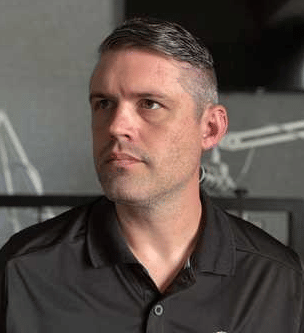

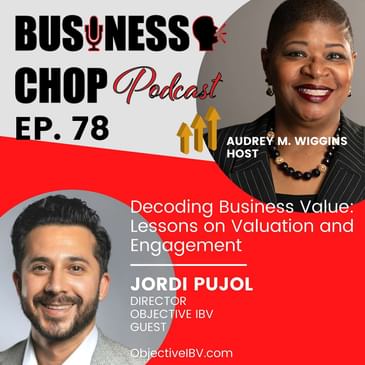


Jordi Pujol is a Director at Objective, Investment Banking & Valuation, and serves as an engagement leader for the firm's Valuation Advisory Services Practice. Mr. Pujol is responsible for expansion efforts in Los Angeles, California, where he serves local clients in addition to serving remote clients across the US.
The interview began with Jordi Pujol, and Audrey discussing the importance of storytelling and appealing to the audience. Jordi then delved into the complexities of creating and harvesting value for companies of varying sizes, emphasizing the need to understand the different stages that companies have to navigate. They also explored the diverse nature of business assets, highlighting the importance of recognizing a company's most valuable asset and the potential implications of personal involvement on a business's value.
Jordi presented a case study of an e-commerce company that initially centered its marketing around its technology, only to discover that their brand was the true driver of success. He emphasized the importance of connecting with consumers on an emotional level through the brand story, highlighting the impact of this approach on consumer engagement and purchase decisions. They also discussed the challenges faced during business valuations, emphasizing the critical role of comprehensive and organized information in accurately assessing the value and potential of a business.
Learn more and connect with Jordi Pujol at:
https://objectiveibv.com
https://linkedin.com/in/jpujol1
jordpujol@objectiveibv.com
Buzzsprout - Let's get your podcast launched!
Start for FREE
Designrr for eBooks, Blogs
Create eBooks, Blogs, Lead Magnets and more!
Riverside.fm Your Own Virtual Studio
Professional Virtual Studio
Altogether Domains, Hosting and More
Bringing your business online - domain names, web design, branded email, security, hosting and more.
Digital Business Cards
Let's speed up your follow up. Get a digital business card.
Small Business Legal Services
Your Small Business Legal Plan can help with any business legal matter.
Get Quality Podcast Guests Now
Keep your podcast schedule filled with quality guests from PodMatch.
Disclaimer: This post contains affiliate links. If you make a purchase, I may receive a commission at no extra cost to you.
Please Rate & Review
Visit Our Parent Company Altogether Marketing LLC
The award-winning Tech Diva Biz Talks is a business marketing and technology podcast exploring innovation, branding, and leadership. Officially indexed on IMDb (2021– ), the show reflects Audrey Wiggins’ work in media production and strategic communications since 2011. It is produced by her company, Altogether Marketing LLC. Learn more at altogether.biz.
[00:00:00] Welcome to the Business Chop podcast where I guest speak on meeting the challenges of entrepreneurship as well as offer tips and advice on business, marketing technology and more.
[00:00:13] Whether you are a newbie or seasoned professional, this episode is for you. I am your host, Audrey Wiggins.
[00:00:23] Let's chop it up.
[00:00:25] Hello, Chop Squad. As always, I'm excited to be with you and to share a fantastic guest. So we're excited today to have Jordy Pajol and he's hailing from Southern California.
[00:00:41] So maybe I don't like that because his weather is probably better than mine over here in Ohio and the pseudo Midwest.
[00:00:50] I don't know if I would like to call it, but either way we welcome Jordy to the show. Now he is the director of objective investment banking and valuation and he serves as an engagement leader for the firm's valuation advisory services practice.
[00:01:08] We're going to learn more about how that's going to help us later on. Now, Mr. Pajol is responsible for expansion efforts in California, LA in particular, where he serves local clients in addition to serving remote clients like us across the U.S.
[00:01:23] So prior to joining objective investment banking evaluation, Jordy was senior manager at Eastern Young in their corporate finance practice under strategy and transactions or SAT.
[00:01:34] He focused on technology and healthcare sectors. We're going to hear more about Jordy on the other side of this message.
[00:01:53] Learn more at bit.ly slash elevate the letter U July 2024.
[00:02:03] More about Jordy. He has 12 plus years of financial modeling experience and has worked in a vast number of financial reporting engagements, tax opinions and intangible asset valuations.
[00:02:17] His focus includes purchase price allocations, business valuations, goodwill and pyramid testing for O9A and other employee compensation related valuations.
[00:02:27] Valuations of IP and other intangible assets. That's going to be a good question right there I think Jordy.
[00:02:33] As well as investment holding valuations for funds in private equity in the venture capital space.
[00:02:40] He has significant experience in audit support for reviews both public and private.
[00:02:45] And he's received his bachelor's degree from Swarthmore College in Pennsylvania.
[00:02:50] He has a master's in finance from a Goddard Business School and completed his MBA from the Wharton School at the University of Pennsylvania.
[00:02:59] And he's also something you may be interested in on this. He's a chartered financial analyst or CFA.
[00:03:04] The designation is awarded by the CFA Institute in investment and financial tube investment and financial professionals.
[00:03:13] And he's a part of the LA chapter.
[00:03:15] Welcome again, Jordy Pajol to the business job.
[00:03:19] Audrey, thank you so, so, so much for having me.
[00:03:22] I'm excited to talk about valuation, talk about everything that creates value and ways to harvest value.
[00:03:29] And the way I'll talk about it is a little bit taking smaller companies all the way to larger companies and the difficulties and the different stages that a company has to go through.
[00:03:40] But where I'll start is I don't know if this phenomenon has a name.
[00:03:45] But have you ever noticed that, you know, you know someone maybe they've lost weight, they've gained weight, they may be aged a little.
[00:03:52] But if you're their partner, their friend, you see them every day.
[00:03:55] It's really, really difficult to know that changes happened.
[00:03:59] Yes.
[00:04:00] So I don't know if this has a special name, but that's what happens with our business, right?
[00:04:06] We're looking at our business every single day.
[00:04:09] We're working within the business.
[00:04:11] We're looking at financials on a weekly basis, daily basis, monthly basis.
[00:04:15] And we forget what it actually looks like.
[00:04:18] You know, another way to think about this is when you adopt a dog and he might not be the cutest dog in the world, but you think he's extremely cute, right?
[00:04:27] And you play with him every day and he looks amazing to you.
[00:04:30] But sometimes we lose a little bit of objectivity and maybe how that dog truly looks.
[00:04:37] So again, the same thing can happen with a business where we care for it.
[00:04:41] We love it.
[00:04:42] And sometimes we forget to really think about how would an outsider think about our business, right?
[00:04:47] And that's kind of where we come in.
[00:04:49] We think about valuation.
[00:04:51] I may have mentioned this in other podcasts or before to you, but what you don't measure, you can't manage.
[00:04:59] And so what we try to help people with is making sure that they're understanding the value of their business and where the value comes from, so that they can take better decisions about how to continue creating value.
[00:05:11] Wow.
[00:05:12] Well, that's important.
[00:05:13] So let's just jump in right there.
[00:05:15] So why is it important or, you know, to help us understand what we value?
[00:05:20] You know, our assets of the life cycle of our business.
[00:05:23] Absolutely.
[00:05:24] Every stage of the life cycle has a different way of extracting value from it.
[00:05:32] Some of the time it'll be pure exploration, right?
[00:05:35] So if you're a startup, that's the best thing you can do.
[00:05:39] You have to explore.
[00:05:40] You have to try out new things.
[00:05:42] You have to test your product.
[00:05:43] You have to get customer feedback and adjust it.
[00:05:46] And at the same time when you're in a much, much older stage, you're using your assets in a completely different way, right?
[00:05:52] You may not really be looking for extreme changes in your technology.
[00:05:57] You may be really looking for those marginal enhancements that maybe get a little bit more profit or can continue to create profit, right?
[00:06:05] So when you're looking at your business, first think about where are you and maybe you think you're still in the teenager face and exploring.
[00:06:13] It turns out you've been in business for 20 years, right?
[00:06:17] In the same way that maybe a 27-year-old still thinks that he can party and be a teenager, same as a 21-year-old,
[00:06:24] they're starting to reach that age where maybe they need to change things and become a little bit more mature about their decision making.
[00:06:32] So that's again what we do.
[00:06:33] We try to help people understand where is that value?
[00:06:37] What are those assets that now you need to work on?
[00:06:40] And through that, they're able to again make better decisions for their value creation.
[00:06:46] So what are some of the assets in our business?
[00:06:49] I mean, what are they?
[00:06:52] So we tend to separate assets into two categories, right?
[00:06:55] We have kind of your hard assets.
[00:06:57] Do you have trucks that you use for your logistics?
[00:07:00] Do you have physical machinery that helps you create your products?
[00:07:04] Then on the other side, it's all of what we call intangible assets.
[00:07:08] So the most obvious one in terms of intangible assets is brands, right?
[00:07:13] A lot of the time we think about Coca-Cola as one of the most valuable brands in the world.
[00:07:20] And the reason is because if we took that beautiful Coca-Cola logo from the red can,
[00:07:26] and we just saw a cola can in the store where we're buying Coca-Cola,
[00:07:31] we might not pay $1.50, right?
[00:07:33] We might just pay 50 cents.
[00:07:34] And so that differential, that extra value that I'm willing to pay
[00:07:38] because of the brand that I trust and that I know and that I've seen before,
[00:07:42] that has extreme value to companies.
[00:07:45] And again, we call it brand or brand assets.
[00:07:48] Sometimes it can be trademarked.
[00:07:50] Sometimes it can be copyrighted, right?
[00:07:52] That brand has potential to be very valuable to a firm.
[00:07:55] And that's, again, probably the most obvious one.
[00:07:58] However, we have other intangible assets, right?
[00:08:01] Our technology, even if it's not patented, has a ton of value.
[00:08:05] Our customer lists, again, even if it's just in somebody's head,
[00:08:10] that still has a ton of value.
[00:08:12] Those are future relationships, future customers, future contracts
[00:08:16] because I have a large network.
[00:08:18] And so when I think about the value for business,
[00:08:21] I'm always thinking about how do I segment that value into the pieces?
[00:08:25] And usually I suggest to businesses that they focus on their most valuable asset.
[00:08:30] Is that them?
[00:08:32] You know, a lot of the time it is.
[00:08:34] And a lot of the time that's actually the worst thing they can do, right?
[00:08:37] We talk about exit planning.
[00:08:39] And in the later stages, right?
[00:08:41] You're the most important thing in the early stages.
[00:08:43] But in the later stages, if you're still very important,
[00:08:47] that actually is detracting value from your business.
[00:08:50] And the reason is because a buyer is going to look at you
[00:08:53] and they're not going to want to keep you around for too much longer.
[00:08:57] And you probably don't want to stay around for too much longer
[00:08:59] if you're selling the business.
[00:09:00] Right, right.
[00:09:01] And so the fact that you've been working in the business
[00:09:03] and not on the business, again, actually detracts from value.
[00:09:07] And if you've been able to build a team around you
[00:09:09] that can pretty much handle everything,
[00:09:11] you're a lot more valuable in that stage.
[00:09:14] So what are some key factors that contribute to a company's value?
[00:09:19] Especially in the context of technology.
[00:09:21] And I know you have a lot of experience in healthcare.
[00:09:23] So every company is unique.
[00:09:25] And every company, like I mentioned, has a unique asset.
[00:09:29] There are certain industries, right?
[00:09:31] If you provide software where technology, the core algorithms,
[00:09:36] think about open AI and their core AI algorithms.
[00:09:40] That's their most valuable asset because everything in the company
[00:09:43] really revolves around these algorithms, right?
[00:09:47] Their subscriptions, the way they create value,
[00:09:50] the way their brand is perceived,
[00:09:52] everything is really relying on this technology.
[00:09:54] In some other cases, if I think about Under Armour,
[00:09:57] the brand needs to be very strong, right?
[00:10:00] It's a consumer-facing brand.
[00:10:02] Sure, the technology is really great
[00:10:04] and we saw that brand grow from providing clothing technology
[00:10:09] to NFL players, grow into what it is today.
[00:10:13] But now I probably don't care so much about the technology, right?
[00:10:16] I just want to make sure that it's good.
[00:10:18] I trust the brand and that's my most valuable asset.
[00:10:21] When you have services firms,
[00:10:23] so firms that are reliant on people,
[00:10:26] a lot of the time the most important thing
[00:10:28] is going to be those customer assets, right?
[00:10:30] Who are the businesses that work with you?
[00:10:32] How do you manage the relationships?
[00:10:34] How do you create repeat purchases?
[00:10:37] And so I would think that those tend to be
[00:10:40] the stronger assets, right?
[00:10:42] Your ability to create long-term contracts
[00:10:45] and long-term projects so that you have predictable cash
[00:10:48] and predictable revenue.
[00:10:50] So again, every company has a little bit of a different core focus.
[00:10:54] And what I tell business again is let's find that out first.
[00:10:58] And then let's try to continue investing in that asset
[00:11:01] because that's going to have the most return on investment.
[00:11:04] Okay, do you have a little story that we can relate to?
[00:11:08] Sure.
[00:11:09] So we worked with a company that again was really trying
[00:11:15] to figure out their proposition in the market
[00:11:19] and they were an e-commerce company, consumer-facing company.
[00:11:23] And they had spent a lot of time thinking about the technology.
[00:11:29] So they continued, all of their marketing I guess was,
[00:11:33] well, we're the best sweat wicking.
[00:11:38] We have all these aluminum things within our clothing
[00:11:43] that I guess lower smell and lower bacteria.
[00:11:48] And it was a young company.
[00:11:50] And it was growing.
[00:11:51] It was pretty popular already.
[00:11:55] And so our analysis I guess suggested that actually
[00:11:59] their technology was not their biggest asset.
[00:12:02] It was, again, their brand.
[00:12:04] And so how do you continue building that brand?
[00:12:06] Well, it wasn't really about only the technology.
[00:12:09] It was about making sure that it was about a lifestyle.
[00:12:12] And so what they did is focus on who wanted that shirt, right?
[00:12:17] Who was the person buying that clothing?
[00:12:20] And it turned out to be, well, people who were traveling,
[00:12:23] people who were hiking and people who needed in the background
[00:12:28] of the technology, but what really they cared about is freedom.
[00:12:31] They wanted to make sure they could pack three shirts
[00:12:34] and then continue about their way in a small backpack
[00:12:38] for 10 days.
[00:12:39] So if you focused on what the brand lifestyle was,
[00:12:45] not only the name, right?
[00:12:46] The name is great.
[00:12:47] But if you focus on what the brand lifestyle was, right?
[00:12:50] I pack one shirt and I travel light.
[00:12:53] The one shirt that can survive 100 days,
[00:12:56] Merino wool being like their core thread
[00:13:00] and how that's, you know, adapts to temperature.
[00:13:03] Then they really started thinking,
[00:13:05] okay, now we understand what we stand for
[00:13:08] and their sales started going up as well
[00:13:10] because their message was more clear.
[00:13:12] Even though again it all relied on the technology
[00:13:14] and the background, but they just needed to focus
[00:13:16] on a different asset.
[00:13:17] That was real key right there.
[00:13:18] That was important because that was the marketing.
[00:13:20] You know, what's the brand story?
[00:13:22] No, to pull at, you know, our heart as far as,
[00:13:26] you know, the heart of the consumer,
[00:13:27] the person that's going to go buy that product.
[00:13:29] That was real important.
[00:13:30] I liked that point.
[00:13:31] Can you share some insights into the challenges
[00:13:35] you often encounter when performing valuations
[00:13:38] for businesses and maybe how you navigated
[00:13:41] those challenges?
[00:13:42] So the biggest challenge that we usually have
[00:13:45] is collecting information.
[00:13:47] A lot of the time...
[00:13:48] I don't want to give it to you.
[00:13:50] No, I wish.
[00:13:52] Most of the time people are really open
[00:13:54] and sharing information
[00:13:55] and if not we usually sign NDAs anyways.
[00:13:58] Yeah.
[00:13:59] But, and we try not to work for competitors
[00:14:01] right at the same time.
[00:14:02] But it's the lack of information
[00:14:06] and the lack of organization around the information.
[00:14:10] For example, we were working with a company
[00:14:13] that dealt with military contracts
[00:14:15] and it had a different process for Navy,
[00:14:17] a different process for Army
[00:14:19] and a different process for the Marines.
[00:14:21] And while they knew their sales,
[00:14:24] they didn't really have all of their historical sales
[00:14:28] by customer really built out.
[00:14:31] So I think they could tell me anecdotally,
[00:14:33] well, you know, last year we probably sold more to Army
[00:14:37] because we had this contract and it was sending
[00:14:40] and I told them, okay, but can I see that?
[00:14:42] Can I see the entire history, right?
[00:14:44] How did you get from five contracts to 10 contracts?
[00:14:46] Who are your primary buyers?
[00:14:48] Where, how are they selecting you?
[00:14:51] Is this all RFP process
[00:14:52] or are you now embedded into their system
[00:14:54] where you can just continue to sell
[00:14:56] and upsell them in any particular contract?
[00:14:59] And again, it wasn't that they had terrible information
[00:15:01] is that they could have had more information
[00:15:04] that really unveiled, I guess,
[00:15:07] where their true value was coming from.
[00:15:09] And once we started digging a little bit more,
[00:15:11] again, a little bit anecdotally
[00:15:13] and a little bit rebuilding the databases
[00:15:15] that they should have had,
[00:15:17] we realized that some of the contracts
[00:15:18] were actually not that profitable.
[00:15:20] You know, it was minimal, minimal profit
[00:15:23] and they were spending a lot of time
[00:15:25] trying to grow a particular branch of the government
[00:15:29] that wasn't really their best branch, right?
[00:15:32] They had large and amazing profitable contracts with Army
[00:15:36] and the Navy once weren't doing so well,
[00:15:39] but they could have noticed that a year ago
[00:15:41] if they had better information systems.
[00:15:43] Okay.
[00:15:44] One of my main questions is always with research companies,
[00:15:47] where have you spent your R&D dollars, right?
[00:15:49] Like what projects have your engineers been working on?
[00:15:53] And a lot of the time they just tell me,
[00:15:55] well, all we track is like total hours, total salaries.
[00:15:59] And so that's all we really know.
[00:16:01] And then someone in the engineering system
[00:16:03] maybe follows Scrum and maybe has all this information,
[00:16:07] but management is not looking at it.
[00:16:09] And so again, that's the hardest thing for us
[00:16:11] because we're trying to figure out, okay,
[00:16:13] where is this value coming from?
[00:16:14] What are you guys doing in terms of
[00:16:16] your historical information?
[00:16:18] And a lot of the time it's not broken out in a way
[00:16:20] that's really helpful for either party.
[00:16:23] So what would be the ideal client,
[00:16:27] say for a startup, not ideal client,
[00:16:29] but what would be the ideal function or behavior
[00:16:33] for even if you know, a startup,
[00:16:35] what should they be thinking about from the start?
[00:16:39] From the launch?
[00:16:40] What should we be thinking about as far as valuation?
[00:16:43] So in terms of valuation, I think at the startup phase,
[00:16:47] I actually tell startups to ignore it.
[00:16:49] There is one area where I think they should focus on
[00:16:52] is understanding how much of the business they want to share.
[00:16:56] And so where valuation comes in is understanding
[00:16:59] what piece of value are you currently sharing?
[00:17:02] For example, if again, if you're a health tech company
[00:17:07] and let's say a medical device company
[00:17:10] and you think that your value is X,
[00:17:14] well, if you're sharing 1% with your future CEO
[00:17:17] or with your future CFO,
[00:17:19] you kind of want to know how much is that worth, right?
[00:17:21] Is that $10,000 because you're worth a million?
[00:17:23] Is that $100,000?
[00:17:25] Or is that worth a million dollars?
[00:17:27] Because you've already hit certain milestones
[00:17:29] that put you in a different category
[00:17:31] when you're sharing that equity.
[00:17:33] And so knowing your value allows you to make better decisions
[00:17:37] about how to allocate that value
[00:17:39] to the different players in your firm.
[00:17:41] And a lot of the time, you want to incentivize those people
[00:17:44] with equity so that they feel like owners
[00:17:47] and they perform like owners.
[00:17:49] And again, if you don't know the value of your company,
[00:17:51] you don't really know how much you're sharing with them.
[00:17:53] And they don't know how much you're getting,
[00:17:55] which is also important, right?
[00:17:56] You want to make sure you showcase to them, like,
[00:17:58] look, I've given you 1% of a company
[00:18:00] that currently it's worth a million dollars.
[00:18:02] But if we hit this milestone,
[00:18:04] it will be worth 10 times that, right?
[00:18:06] And so that person can start understanding,
[00:18:08] wow, I really need to help this firm get to that next level
[00:18:11] because it's in both my interest and the firm's interest.
[00:18:14] With your experience in investment holding valuations
[00:18:18] for private equity and venture capital funds,
[00:18:21] do you balance between maximizing,
[00:18:23] this is a long question, value for investors
[00:18:26] and maintaining a realistic assessment of a company's worth?
[00:18:30] Do I need to repeat that?
[00:18:32] No, no, I totally understand where you're coming from.
[00:18:36] So investment valuations are extremely important
[00:18:41] because they're the way you create trust with your investors.
[00:18:44] So sure, you may be able to get away
[00:18:47] with overstating the value in any given year
[00:18:50] and your investors might not really notice or care,
[00:18:53] especially if things are looking good.
[00:18:56] But the moment that things don't start looking as good,
[00:18:59] right? If you have to take an impairment in the following year,
[00:19:02] you're going to get a lot of questions around that
[00:19:04] and you're going to completely lose trust
[00:19:06] because the first question they're going to ask
[00:19:08] is why didn't we market up last year?
[00:19:10] And so I think for funds, right,
[00:19:13] when they're marking their investments,
[00:19:15] it's really important to get a pulse in the market
[00:19:18] and be able to communicate that to your appraiser.
[00:19:21] Sometimes they're not the experts
[00:19:23] or they're not seeing the everyday like you are.
[00:19:26] And at the same time, be able to just back down
[00:19:29] and let them be completely objective
[00:19:32] so that you get a true feel for what the value
[00:19:35] of this investment is in the open market.
[00:19:38] Again, without your attachment to it,
[00:19:41] if I was going to, again, sell one of my dogs,
[00:19:44] I think I would put a price that would be completely ridiculous
[00:19:46] to someone who wasn't their owner, right?
[00:19:48] And so again, there's that attachment of being
[00:19:51] a venture firm or private equity firm
[00:19:53] where you want to believe in the entrepreneurs,
[00:19:56] you want to believe in the teams,
[00:19:58] but sometimes you got to step back and be objective
[00:20:01] because you're building long-term relationships
[00:20:03] with your LPs, right?
[00:20:05] The people that are providing the money
[00:20:07] so that you can manage it.
[00:20:08] They're the ones that really care about
[00:20:10] true objective valuation.
[00:20:12] And so you have to think about them
[00:20:14] when you're thinking about the value
[00:20:16] that it's going to look like in your books.
[00:20:18] But Jordy, how can we get in touch with you?
[00:20:20] The easiest way is always LinkedIn.
[00:20:22] It's a good way to see my profile.
[00:20:24] It's a good way to see the articles that we publish.
[00:20:27] And it usually has my email,
[00:20:29] but if not, my email is jordy.pujo
[00:20:32] at objectiveibv.com.
[00:20:36] That's my first name.
[00:20:37] Last name at objectiveibv.com.
[00:20:40] And that's our website as well.
[00:20:42] You can see our entire practice there.
[00:20:44] We have both an investment banking arm
[00:20:46] and a business valuation arm.
[00:20:49] And both act together,
[00:20:51] but at the same time provide completely different services.
[00:20:54] So if you want to exit at some point,
[00:20:57] you can start the conversation with our investment bank,
[00:20:59] our M&A sell side practice.
[00:21:01] And if you're just looking for paper value,
[00:21:04] you're looking for a compliance exercise
[00:21:06] or you're looking to make a strategic decision,
[00:21:08] please reach out to our side of the world,
[00:21:11] which is business valuation.
[00:21:14] Knock out your competition with All Together Marketing.
[00:21:17] We elevate your brand.
[00:21:19] Take a stance with your business name,
[00:21:21] logo, the tagline, your colors,
[00:21:24] even the fonts for your business.
[00:21:26] And then jab left with your website.
[00:21:28] Jab right with core values.
[00:21:30] Back up with product experience
[00:21:32] and bring it on with you.
[00:21:35] Visit altogether.biz
[00:21:37] and let us help you create
[00:21:39] a knockout brand.
[00:21:41] Jordy, what nugget or two
[00:21:44] that you wanted to leave the chop squad with?
[00:21:47] So I think again,
[00:21:49] the biggest thing for me is simplifying
[00:21:52] and looking at those,
[00:21:54] I guess obvious not so obvious strategies
[00:21:57] that are out there for you, right?
[00:22:00] I think a lot of people end up somewhere in the middle
[00:22:03] when they're thinking about strategy
[00:22:06] and something as simple as being
[00:22:09] who am I? Am I the low cost, high volume seller
[00:22:12] or am I the high customization, high price seller?
[00:22:16] Can be something that again,
[00:22:18] helps your business
[00:22:20] and focuses the value of your business
[00:22:23] even in such a simple change, right?
[00:22:25] Most of the time you're going to end up somewhere in the middle
[00:22:27] after a few years.
[00:22:28] And so it's a good time to reset
[00:22:30] and really think who am I, right?
[00:22:32] Do I stand for the brand?
[00:22:33] Do I stand for the technology?
[00:22:35] Am I just a great networker and a great seller?
[00:22:37] Maybe I should invest more in that area of my firm.
[00:22:40] But simplifying, looking at from the outside
[00:22:43] and really thinking where should I continue
[00:22:45] to put my dollars
[00:22:46] and what's the strategy
[00:22:48] that I'm going to continue following in the future, right?
[00:22:50] Just defining that
[00:22:51] and from then onwards
[00:22:52] you're going to see a lot of value creation.
[00:22:54] Specialized in is business valuation.
[00:22:56] So a lot of the time I'm talking about
[00:22:59] value at different stages
[00:23:01] of a company's life cycle.
[00:23:03] And the idea is that each stage comes with different actions
[00:23:06] that you can do to harvest value.
[00:23:08] So create value, harvest value
[00:23:11] and be able to move on to the next stage.
[00:23:13] So typically I try to go through that, right?
[00:23:16] Think about it.
[00:23:17] They just companies all the way through mature companies
[00:23:20] and have a little nugget of information per stage.
[00:23:24] A lot of the time my key message is around
[00:23:27] you can't manage what you don't measure
[00:23:31] in those stages to better understand your company
[00:23:34] and be able to take actions that enhance value.
[00:23:37] Thank you, Jordy.
[00:23:38] The CHOP Squad, you have your your margin orders.
[00:23:41] Go back. Let's look at our enterprises
[00:23:44] and find out where we are
[00:23:46] and definitely plug into Jordy.
[00:23:49] You know, one of the team members there
[00:23:51] for more information
[00:23:52] to try to get us on track
[00:23:54] so we know what our values are
[00:23:56] or what they could be.
[00:23:57] That's exactly right.
[00:23:58] Set stakes in the ground and continue to manage for value.
[00:24:01] Thanks again, Jordy.
[00:24:02] Thank you so much for having me.
[00:24:04] Thank you for listening to another episode of the Business CHOP.
[00:24:08] It is my hope that you were able to gain usable information
[00:24:11] from today's episode
[00:24:12] and that you will download and share this podcast.
[00:24:15] Be sure to plug into our guests.
[00:24:17] Go through their website and social media channels
[00:24:20] to see how they can help you further
[00:24:21] through their products and services.
[00:24:23] As well as plug into our website, alltogether.biz
[00:24:27] where we will help you expand your brand.
Resources
Some of the resources here are affiliate links. We may receive a small commission if you buy or subscribe. It does not affect the price you pay.

BUZZSPROUT. The best way to launch a professional podcast.
RIVERSIDE.FM. Professional Remote Content Creation Studio

DESIGNRR. Get Instant Transcripts from your Podcast, Video, or Webinar

ALTOGETHER DOMAINS. Online Solutions for Domain Names, Hosting, Website Security, Email Marketing & more