
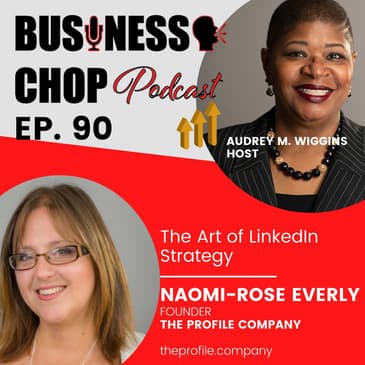


Join us in this insightful episode as we sit down with Naomi-Rose Everly (formerly Johnson), an Expert LinkedIn Profile Writer and Strategy Coach. With over 12 years of experience, Naomi has mastered the art of helping professionals position themselves as industry leaders and attract pre-sold prospects. She is the founder of TheProfile.Company and the author of three influential books: Magnetize Your Expertise on LinkedIn, What to Put on Your LinkedIn Profile, and Grassroots to Green Shoots.
Operating from Portsmouth, UK, Naomi serves an international client base and has a remarkable list of achievements. She has provided LinkedIn profile reviews for LinkedIn's clients at their global conference and has consistently demonstrated resilience in her career, which she considers one of her greatest achievements.
Tune in to hear Naomi's journey, her insights on LinkedIn strategy, and the fun stories behind her professional milestones. Don't miss this opportunity to learn from one of the best in the industry!
Links for listeners:
https://linkedin.com/in/naomijohnsonuk
https://magnetiseyourexpertise.com/scorecard
Are you a professional with over a decade of experience, now channeling your expertise into a business driven by your vision to make a real difference in your industry?
A business driven by a desire to make an impactful change in the world has the power to be a formidable force in the world. But it won't happen by chance.
Take the scorecard. It takes just 2 minutes. It’s completely free. Receive customized results instantly.
Guests will receive a customized response based on their answers and an opportunity to download my book Magnetize Your Expertise on LinkedIn. The responses provided also suggest pages within the book to read to learn more.
Start for FREE
Designrr for eBooks, Blogs
Create eBooks, Blogs, Lead Magnets and more!
Riverside.fm Your Own Virtual Studio
Professional Virtual Studio
Altogether Domains, Hosting and More
Bringing your business online - domain names, web design, branded email, security, hosting and more.
Digital Business Cards
Let's speed up your follow up. Get a digital business card.
Small Business Legal Services
Your Small Business Legal Plan can help with any business legal matter.
Get Quality Podcast Guests Now
Keep your podcast schedule filled with quality guests from PodMatch.
Disclaimer: This post contains affiliate links. If you make a purchase, I may receive a commission at no extra cost to you.
Please Rate & Review
Visit Our Parent Company Altogether Marketing LLC
Register for our Elevating the U in Entrepreneur virtual business summit
Tech Diva Biz Talks is a business marketing and technology podcast exploring innovation, branding, and leadership. Officially indexed on IMDb (2021– ), the show reflects Audrey Wiggins’ work in media production and strategic communications. It is produced by her company, Altogether Marketing LLC. Learn more at altogether.biz.
[00:00:00] Welcome to the Business Chop Podcast, where our guests speak on meeting the challenges of entrepreneurship as well as offer tips and advice on business, marketing, technology and more. Whether you are a newbie or seasoned professional, this episode is for you. I am
[00:00:18] your host, Audrey Wiggins. Let's chop it up. Hello, Chop Squad. It's great to be with you again. I'm excited as usual for our guest today. Our guest is Naomi-Rose Everly. She is an expert in LinkedIn profile writing and she's a strategy coach. We really want
[00:00:47] to pay attention to that. I think we can all use some help there. We start these projects because we have to put them out there, then we forget about them and they're a disaster so to speak. Naomi-Rose is going to help us out today. She has spent
[00:01:02] the last 12 years helping people position themselves as the go-to expert within their industries and structuring their business so prospects come to them pre-sold and ready to buy. She is the founder of The Profile Company and the author of
[00:01:17] Magnetize Your Expertise on LinkedIn. What to put on your LinkedIn profile and grassroots to green shoots. I love that, Naomi. Welcome to the Business Chop. Thank you for having me. Yes, absolutely. We're going to come back and start our questions on the other side of this quick commercial.
[00:01:59] Welcome back, Naomi and the Chop Squad. We're going to dive right in on our topic today of LinkedIn, our profiles and any other expertise that you want to share with us. So we're excited to get started with that. So on a pretty basic level, why is it
[00:02:17] important for us to even care about it or even have a LinkedIn profile as a business owners? Well yeah, I mean if you're in business then there is this expectation that you're going to be on the biggest professional platform there is
[00:02:29] and even if your strategy is more business to consumer and more suited to Instagram and TikTok, there is a level of conversation you want to be having with your peers and your suppliers where LinkedIn will come into play. So
[00:02:42] you can be whoever you're being on Instagram and that appeals to your audience but there's that backstage bit of those interconnections where LinkedIn becomes important. When somebody Googles your name, LinkedIn will come up in the search results and you want to make sure when they land on
[00:02:59] your LinkedIn profile that you say something of relevance and importance and of interest to them because people generally did not come to your LinkedIn profile today to learn about you depending on all the different ways that they have come to you, a comment you've read, your name popping
[00:03:17] up on your headline looking interesting on LinkedIn and they're looking at your profile and it's like well why am I looking at this? How is this a good use of my time? Is this relevant to me? And we need to interrupt their
[00:03:30] day and get their attention otherwise they just swipe away and if they have come deliberately to find you, what kind of first impression are you making? Are you showing consistent business message? Are you really showing
[00:03:44] that you're not really having a problem that you solve? Or are you just putting a CV based thing up there and it looks like you haven't put much effort in. So really it's just a vital part of your marketing mix.
[00:03:53] Absolutely. So what are some of the fundamental mistakes that we make when we set up our profiles? Yeah, so the first one would be thinking this is still a recruitment site and writing your business and job up like it's a CV. The only
[00:04:11] person that's a resume for the few in the middle of parts of the world. Yeah, absolutely. So people often write it as a resume using terms and language that only a recruiter would actually sit there and read but it's not
[00:04:28] actually how we relate to people. If you imagine meeting somebody in person and then you relayed what you say on your CV, your resume, then people will be like you're weird, that's odd, I don't feel like
[00:04:40] you're connected to me. And they back away, they really would. They'd be like, right, okay. So we've really got to think about LinkedIn like a relationship and we've got to reuse words and terminology that feels like a conversation, that feels like we're drawing somebody into our
[00:04:54] world and we're really making that heart to heart connection with them where they feel like they've met us. What you were talking about sounds like maybe one of the questions or comments that I have hear from you was like our
[00:05:06] entrepreneurs, we kind of struggle with the marketing part. So you're talking about it looks like reads like a resume. Our job experience because some people were entrepreneurs or business owners right out the gate. They never worked for anyone.
[00:05:19] But those of us who have and we do have that laundry list if I worked here for this year's how do you suggest that we format that area to show that I don't know if it's necessarily time frame because I'm thinking like an employee or employer but
[00:05:34] show that how the expertise is stacked up. Yeah, the past experience is still so important because even if you've been an entrepreneur right out the gate, we still need to know where you've been and what you've been up to to know
[00:05:48] whether you want to invest in and sponsor your next entrepreneurship enterprise, you know, whether we want to get behind you as a person as somebody coming through from employment again it's still relevant there. And in the current experience entry you're going to put your
[00:06:05] business today and you're going to pitch in there exactly how you help people. So you're going to say this is the company and this is what it does. This is how I help people and ideally put your packages
[00:06:16] in there so people can start imagining what it would be like to work with you. And so they then are doing their own objections in their head and talking to themselves going well I could work with
[00:06:25] them if it was like this but I wouldn't want it if it was like that. So they actually come pre sold to a meeting because they've already got an idea of what working with you looks like and nothing is a surprise.
[00:06:33] And the about section is all about the problem that you solve, why you solve it and written in a way that resonates with them. So people don't resonate with solutions they resonate with problems. So it's gaining their attention. So as somebody on LinkedIn as a service based business,
[00:06:53] an expert entrepreneur, a thought leader, you really want to be leading with the problem that you solve, standing in the world for a problem that you see needs fixing your way. And you're so adamant about it, you've left your job and this is what you're doing now.
[00:07:07] And so when you take such a stand, you do stand out in the marketplace, people love the passion, they get it, they love the mission, they get it. But what they also need to know before working with you is well how did you come to this conclusion?
[00:07:21] What did you see? What did you experience? So where we have probably in the past put up a CV based past experience. What we want to do is we want to think about what was it during each of those job roles that brought
[00:07:35] me to this position where I am today? What did I see? What did I learn? Who did I meet? What did I experience? That actually has cultivated my opinion today. Then we want to go into these experience entries and we want to write this is what the company
[00:07:50] was to scale and size so we understand the context. And this is what I worked on and this is what I achieved and why I came to this opinion. So sometimes it's not necessarily that you would go on and on about an opinion in that.
[00:08:05] With one client, it was very prominent with project management, he said you've either got project managers who can steer a ship in a different direction and then you've got project managers that do uncertainty. And those who can cope with uncertainty in
[00:08:21] developing a project can do that but they cannot steer a ship and those who steer a ship cannot do uncertainty. It's really a profound insight and it's the problem he was standing for. So we kind of talked about examples of that in
[00:08:35] each of his past experience entries and how that played out and how he came to that conclusion. In one of the entries, it was here that I first realized and understood this and he breaks it down into why. And then, yes, and you want to talk about the
[00:08:55] economic climate at the time. Like if you were in IT during the 90s or the 90s, that's time of uncertainty and change. So you might be 60 now but you led massive teams through change and through uncertainty and those things.
[00:09:10] So it actually speaks to today as to why you can do it. So it's all really relevant. What I find is putting the time into doing that with somebody who's helping you to dive in and get deep with it and who knows the problem
[00:09:25] you're going on to solve. This is what I do with people. I really can see how that is formulated to tell a story in those entries. Now, a lot of people aren't going to take the time to actually read all of those entries.
[00:09:37] A person will in two positions. One, they're trying to decide whether to work with you over another supplier or trying to decide whether they want to work with you at all. And they're really on that, yes, no, shall I send the money today kind of bit.
[00:09:51] Or they've just sent all their money over and they're in buyer's remorse going, who are you and why can you help me? That they've been so hooked on to you solving their problem that they are now actually worried, can he do it? Can he not do it?
[00:10:04] I actually don't know who this person is. It's that they want to go and read it and get their reassurance. And the other person who will look at it is the person whose maybe wife or husband, daughter, son came home and said, I've spent 10 grand on this.
[00:10:18] It's going to be amazing. Why? Why did you do that? That's a lot of money. Why are you investing that? They need to look at it for assurance as well that they've made the right decision. So it's really worth doing.
[00:10:29] But also the other thing, if I may say, the other thing about really doing that work is you understand yourself better. And when you understand yourself better and how all of that played out, you hold yourself better and you tell stories
[00:10:42] better and you connect to the, you know, like Steve Jobs said about cookie crumbs and how they all light the path up of where you're going. Something like he said about that. And it's just like, oh yeah, I get how I can do this now.
[00:10:57] I get where I'm going with that. So you channel a lot more experience and background just from owning it. That's how you got where you got to because the last thing you really want to do is go, I'm an expert in my industry and I absolutely believe it
[00:11:10] needs to be done this way. And all your rationale is actually unconscious because it's just how life has unfolded for you. You really want to grasp that, get it and the LinkedIn profile, getting that written with those experience entries in and owning what you've written really changes you.
[00:11:26] But it also changes the buyer and how they interact with you. Even when you're doing the job, if I may say, even when you're doing the job, it will change how they operate with you. If they think that you actually don't know anything about their industry
[00:11:41] or you say something that resonates with them as like, oh, they don't understand this industry. That can really fracture a relationship and trust. And when the trust is gone, things get friccious, you know, like difficult to work with each other. Yeah. But if that person can go,
[00:11:58] oh, I don't think they get me. I don't like what they're saying. I don't like the challenge they're giving me. I don't want to change. I don't like this. I don't think they understand me. But they go. But at the same time, he did work
[00:12:12] in this company, in this industry, during that time in the economic history, and he did go through that and experience that and da da da da da. So he does know what he's talking about. I'll trust him. OK. And it happens so quickly.
[00:12:25] They wouldn't even know if they've done it. They'll be like, oh, my gosh, I don't like what you just said. I'm scared. Rationale, rationale, rationale. Yeah. What is the next question? And you don't notice it's happened. People knowing that little bit extra about you, it's going to go
[00:12:40] away. Wow. That is crazy. So staying in that vein about the different job experiences for a moment here. What about jobs or jobs that we've had where the titles don't necessarily line up with what we're promoting or looking for? But there's things that we learned within those positions.
[00:13:03] How do we, you know, how would we kind of, and I know this, and this is like an interview, so you can't go into detail, detail. But how will we handle those? Do we add those jobs? Or do we just drop them or what?
[00:13:16] If the job contributes to what you're doing today, absolutely do. And I wouldn't worry too much about the job title at all because it's where you've been, it's who you've worked for. And there does need to be a level of accuracy with that.
[00:13:27] You know, instead of making up vice president of making up job roles. But there are times when we do jobs on the side just to get by. There are times when we chose to take a career change and then we decide not to do that career change.
[00:13:42] So anything that doesn't line up with a big story, the direction you're going on now and that is at perhaps short term, don't include it because it's distracting. It raises questions that don't need to be raised and takes the person off task for where they're going.
[00:13:56] You are who you are today and you've got here because of what you've done before. Really great example of this is when I got started in this, which was 11 odd years ago working for another company. I was, I started out doing the LinkedIn
[00:14:09] profile reviews as a way of getting to know prospects and sell them on a training course. The training course was very practically on LinkedIn, but the session I was doing was very much what I still do today, which is the LinkedIn profile review.
[00:14:24] And so I got to know this guy and I gave him insights to do on his profile. And he brought into the course that we had and it was half a day and then come back three weeks later and we do another half day.
[00:14:37] So they got time to implement the learning. And what was really interesting was is that he said business coaching with the precision of a Michelin star chef. And I said, I don't get it. Like I didn't know, firstly I didn't, I said, I don't know the
[00:14:54] Michelin star chefs. Well, he has to tell me that precision is really important. I was like, oh, okay. I didn't know that. It was just really good cooking and then and I said, but I still don't understand why you're saying this Michelin star chef, because
[00:15:08] there's nothing in your background that says that you ever a chef, you're a business coach. And before that you were this. And then there is no before that like where, why are you saying this? It's completely out of context. And he said, oh, well, because
[00:15:22] I was before I was a business coach and before I was at this, I was actually a Michelin star chef. Wow. Oh, I said, oh, okay. So your position with a Michelin star chef actually works, but you need to go back and put on
[00:15:36] that experience entry of you becoming a Michelin star chef. We don't need to do all the chef in positions that got you to that point. That is the pinnacle of it. That's the top of the game. Just going on there. One paragraph, I started off
[00:15:48] at 18 went to community college and worked my way up, became the head chef and then became Michelin star chef. That's just one paragraph of that entry. But you actually want to say what restaurant, where was the restaurant? How big was it? How long did you do it?
[00:16:04] What was the, you know, the journey of that? So we don't need all of the experience entries. We just need that one anyway. When he came back three weeks later for the second session, he said, you're not going to believe this, but I was in
[00:16:18] the running to be this big company's this company's business coach. And they've been procrastinating for three months trying to decide which one of five of us were going to be their business coach. And they couldn't decide. And then somebody suggested, let's just have a meeting,
[00:16:36] sit down, pull up the LinkedIn profiles and make a decision from the LinkedIn profile. Okay. And they put like an hour or so aside to debate this. And he said, as soon as they opened up my, they came back to me and said all of this.
[00:16:52] But as soon as we looked on your LinkedIn profile, that was it. You were hired. And we really wish we'd looked at it before. And, and I said, oh, why was that then? And he goes, because it was a restaurant trying to be a Michelin star.
[00:17:05] So he's gone in as a business coach and never told them I was a Michelin star chef. The committee came together and looked at his LinkedIn profile again, you know, and said, we're making a decision. There was no decision to be made.
[00:17:19] It was a huts and cuts above everybody else. Wow. Of course, he got the job. So context is really important. And, and, you know, these things that you think is complete a Michelin star chef and a business coach, how do they go together? Well, they do because there's
[00:17:33] position in business coaching, apparently. And so is it in chef thing. And, and, you know, even if they weren't a restaurant, getting to that level of in your profession is something very few people do. It requires discipline. It requires hard work. You know a lot about someone's character.
[00:17:52] If they can achieve that. So again, it communicates so much. Yeah. And that's, that's an important thing you just said. As you said, that position that he had as a head chef represented certain skill sets, not the culinary skill sets, but the, you know, with the
[00:18:10] soft skills or the, you know, the character of the person, you know, what did they, what did they learn from that? And I think that was that's very clear to me that makes should make people feel more comfortable. But putting in some of those
[00:18:21] jobs, it's almost like what you have a two year degree, a four year degree and maybe the, the subject matter is not related to the job. You know, the major or, but sometimes, you know, at least years before anyway, I don't know if it's still true
[00:18:37] today, but a hiring manager or in this case say, you know, business business partner. They look at that. Well, it takes a certain type of person to, you know, to go through that schooling. And get those grades, you know, finish and actually achieve a
[00:18:51] degree. So sometimes I think they just pick up this person has a degree. We want them in every may not necessarily be related. Excuse me to the actual position. Yeah. Achievements these things that you have really changed because the other week my friend comes up, she comes over.
[00:19:12] We're at church Sunday morning and she comes over. My other friend comes over she goes off. She's answering the phone now. She's answering the tire today. She's exhausted. I said why? She says, Oh, I was up past midnight watching their Christmas and at Glastonbury.
[00:19:24] Oh my goodness, that man. And she's like, Oh, and I liked him even more when I realized he was classically changed in the arts in musicals. I was like, Oh, I said, Oh, I said, well, yeah. Oh, well, he's disciplined. He's dedicated. And I'm like, Oh, yeah.
[00:19:42] And we like to run a whole other levels just for the fact that you had this like classically trained degree. Right, right. Yeah. You would do in fact quite a lot and it's not in fairing incorrectly either because to get a degree in the classical, I want
[00:19:55] to say arts, but I think it's music, something like that. It takes so much. Yes. It really does communicate a lot about a person. And you know, because otherwise you might just think, Oh, they're just a good singer that got successful and made loads of money.
[00:20:10] But yeah, there's not there's a lot more behind him. It does these little facets of information and what we put on our LinkedIn profile. One of the things I'm really clear with is like when I'm interviewing people is to bring those things forward. So I had a client
[00:20:24] recently who's won a few business awards, women in business, Queens in business, that kind of thing. OK. And and while I was putting her profile together and what she sent me a chapter that she'd written in one of these co-written books. And it was talking
[00:20:42] in there about how she was in Malaysia learning to be a doctor. And then she had to learn speak in English and she was very intimidated and it led to professional bullying and how she had to overcome. And it's those kind of little bits of information that
[00:20:57] actually really make you build a relationship with someone and go, Oh, wow, I can see because when I read that chapter, she was so did that chapter was like, who is this compared to who I met? Yes. Because it was years in she was talking
[00:21:12] about her past and she'd gone through massive personal developments or had no idea that she was ever that insecure, ever that worried about certain things. And what was important when I wrote it was a had to have context, had have relevance meaning you don't just come out with
[00:21:27] stuff that's personal and it had to relate to position her as someone that you wanted to have a relationship with and would trust in business. And that was really important because you just didn't want to think of her as the whole way. Right. Something to go
[00:21:42] at is some vulnerability here and overcoming. And the other thing that was really important before everybody puts up that they were bullied in school because that's just whatever it was to put the word professional bullying in front of it, because then you understood this is a woman
[00:21:58] who had to learn English on the go. Yeah. Prejudice against her. That's right. And this was in a professional context when she was already qualified and there's certain ways of putting words and phrasing them, set the context, really draw a person to you where the profile feels like
[00:22:15] they've really built a relationship with you and are in your world for doing that. What are the fundamental principles of a LinkedIn profile? And you also talked about sales and the buying process and stage. So if you can kind of weave those together. Yeah, absolutely.
[00:22:36] So there's a couple of things to really note. Your LinkedIn profile is the equivalent of meeting somebody at a business networking event. So I look across the room and I see a well put together person, photo. I come over and I say hello. That's the name.
[00:22:53] What is it you do? Headline statement. That quick. Oh, OK. That's interesting. And then so to tell me more about that, that's the about section. And then it's like, oh, this is really interesting. Exactly how can I work with you? That is the entry for the experience
[00:23:10] that really nails down everything that you were talking about above and the problem and why you and why you want to do it. Never use the word passionate, but why you're passionate about it, you know, is the thing. I'm sorry I've got to take that word
[00:23:25] out of my profile. Sorry. Yeah. Demonstrate passion, never say that you are is the key. And actually, with all your values, never tell people what your values are. Demonstrate them through what you're talking about. So what we really want to do is we want to open
[00:23:42] up at the beginning in the about section of context. This is the conversation we are about to have. So nobody cares about you until you become relevant to them. So talk about the problem that you solve and how it's showing up in their world in a way where
[00:23:57] they'll go, oh my gosh, that's me. Or they'll go, huh, that's not me. I'm not going to read anymore. She clearly does something else. But that's interesting. I'm going to remember that. And next time they hear someone talk about that, they go, oh, did you know?
[00:24:14] No, I didn't know that. Now they're in awareness and probably come across your profile because everyone's connected. So their awareness is up. So what we want to do is set context. This is what this is what this profile is going to be about. And that goes
[00:24:29] with the background image as well. So the professional person who's thought about this, so well formatted paragraphs with good spacing, capital letters in all the right places. And also to remember that you're going to scan read really quickly. So if you for example, this is this is brilliant.
[00:24:46] Someone did this. And I said to someone in a profile review. So you do SEO, search engine optimization. I went, no, I don't do that. I don't know why everyone keeps saying that. I don't. And it even says on my profile, because people keep misunderstanding my subject.
[00:25:03] I'm like, what can I just point out to you that at the end of a paragraph, you haven't just written SEO and at the end of the paragraph, every word stands out. You've actually written, I don't do search with a capital S whole word E engine O optimization.
[00:25:20] I can't see the word don't just in front of that. Exactly. Exactly. Well, so must down reading down and trying to read properly. It's at the end of a paragraph I'm trying to decide whether I'm going to read this or not read this important and where they fit
[00:25:38] on the paragraph is really important as well because I'm going to scan down, take a feel of it, see if any words jump out. Make it all that sounds interesting and then I'm going to keep reading. So we need to think about getting people to identify
[00:25:55] with and go, my goodness, that's me. Oh, you solve it and you solve it this way and you do that because if I don't solve it, this could be some of the problems I might have and this is how I can get in touch with you.
[00:26:12] And what we want there and this is really the strategy work I do is the call to action. 15 minute chat doesn't fly. You want to invite someone to come in and you're going to be able to talk to them. So before that conversation, I'm going to be able,
[00:26:30] in the time we've got together, to list all the information I need to make a recommendation to you, whether that's to work with me or work with somebody else. But that's diagnostic is going to move you forward. It's an attractive proposition. You've got context for why you're
[00:26:50] sharing private information with people. You've got a calendar link that says rescheduled if you need to. And you're like, I have to reschedule because I have to speak to this person. So you're not going to get passed up and overlooked. And if you are getting a lot of
[00:27:07] no shows, I would say that that call to action isn't strong enough. So you need the call to action and then you need to write map out what working with you looks like. So they're like, oh, I can see that. And I would also go to say
[00:27:23] that the first 47 so it's the first 47 characters of your headline are also the most important as well, because when you go commenting on other people's posts, you are joining a conversation. You're getting seen by people in your first degree, second and third degree network. And that's
[00:27:43] where your new prospects can really come in. And if they see you write something intelligent and go, that's an opinion. Whereas if you write something really interesting, that's your expertise and they can see you the first 47 your headline characters of your headline right underneath your name. They go,
[00:28:01] that's a very interesting expert opinion. I'm going to click through and see who they are and what else they've got to say. So that first 47 is if you went, I work with people who are well, I can't see it. So I've lost me now.
[00:28:17] I'm not going to open it. You know, you need those people to be able to see you. So that's the beginning. So that's me. I'll click. I'll go through. So, yeah, calls to action, engagement, feature content is really important now. Getting that visual on there. Download my
[00:28:35] this or read this new post lead people through your sales funnel. Wow. That's awesome. And on a quick question, because we're talking about our personal profiles. If we do own a company page, then I don't know how it is for you guys in America. But we
[00:28:55] every company that's registered legally here links and picks it up anyway. So you definitely want to go and claim that page and it comes out in capital letters to claim it and then rewrite it since not capital letters. So, you know, it looks like you claimed it
[00:29:17] to your personal page. So in your personal past, your personal experience, just edit the company you're working for, delete what you've already got, start rewriting it and your company page will be in the dropdown select from the dropdown. And now that that
[00:29:31] logo will come through on your profile. And with that, you obviously want to fill out all the sections on the company page, but you don't have to use it. You don't have to do anything with it. One thing I do is if I post something really good
[00:29:44] for myself or my personal profile, I will then duplicate it over on the company page. If I see somebody sharing some content that I know customers of mine followers of mine would be interested in, I will go and share it to that
[00:29:57] company page. It's not saying that anyone's actually looking anyone who goes and looks is a great archive for me. And it's a great place for people just to go Oh, here's some interesting stuff that Naomi endorses
[00:30:09] and it's got some movement and content on there. And you really don't have to do very much with them. Glad you said that. Yeah, just make sure all the information is filled out that they know how to get in touch with you. And
[00:30:23] there's not much more to it. I mean, big companies have multiple people speaking on their behalf, so they want a hub to put it all under the people by people. So when you're posting, you're going to want to
[00:30:32] post it yourself. Okay. Okay. All right. Awesome. We appreciate that. I know you have a couple of books we mentioned earlier if you want to talk about those and you know, let's see what those look like. For those who are watching the video version.
[00:30:47] Yeah, so I have written a book called magnetize your expertise on LinkedIn and discover how to build your business so you become the only person your prospects want to work with. And that is available people can buy that on
[00:30:58] Amazon but they can also get a free copy of it or a copy of it on my website and magnetize your expertise.com. And there's also a scorecard that goes with that where you can answer 18 questions just to see
[00:31:12] how well you've got the things structured in your business to allow LinkedIn to work for you. And it gives you a diagnostic and some answers as to how well you're doing. And that's www dot magnetize your expertise.com forward slash scorecard. And we can put that in the
[00:31:28] show notes. Yes, 18 questions fill that out the diet that the recommendations when it come out will actually tell you bits that you're interested in or tell you which pages in the book to go and read. And you
[00:31:40] can download your own copy from there and then obviously go read those sections. Awesome. And we don't have to say chop Scott where to follow or get in touch with Ami Rose because where is she? She's on LinkedIn.
[00:31:57] Yes, you will spot me on there. No problem at all. Oh my goodness. Yeah, this has been been exciting. I'm so glad that, you know, they had the chance to do the chat with you today. Thank you for having me.
[00:32:08] Oh, yes, absolutely. So is there any last bit of advice that you want to leave with us? Or nugget? You know, it's like drive this point home. Yeah, I think it's really get to the heart and nub of the problem
[00:32:20] that you solve. And so that you stand out in your industry, like why? Why are you taking this path? What is it you really want your ideal customers to do? And what is the problem you really want to solve for
[00:32:32] them and therefore have them do? Like, what is it? Why? Why you? Because once you've got all of that coming through on the profile, you will really stand out. Don't be generic. People love someone on a mission. Your mission and reason why won't resonate with everybody,
[00:32:48] but it will resonate with your ideal clients. Awesome. Thank you. Really appreciate you Naomi Rose. This has been an awesome conversation and chop squad. You have more than marching orders. You got instructions step by step. And so definitely plug
[00:33:01] into to Naomi Rose and what she's doing books, take that golden get the scorecard and take that probably some interesting data that will come up. So let's let's elevate ourselves. Thank you and we'll see you next time. Thank you for listening to another episode of the business
[00:33:18] chop. It is my hope that you were able to glean usable information from today's episode and that you will download and share this podcast. Be sure to plug into our guests go through their website and social media channels to see how they can help
[00:33:31] you further through their products and services as well as plug into our website all together dot biz where we will help you expand your brand.
Resources
Some of the resources here are affiliate links. We may receive a small commission if you buy or subscribe. It does not affect the price you pay.
BUZZSPROUT. The best way to launch a professional podcast.
RIVERSIDE.FM. Professional Remote Content Creation Studio

DESIGNRR. Get Instant Transcripts from your Podcast, Video, or Webinar
ALTOGETHER DOMAINS. Online Solutions for Domain Names, Hosting, Website Security, Email Marketing & more